We already have an ERP (Kingdee / Yonyou / SAP). Why do we need a reconciliation platform?
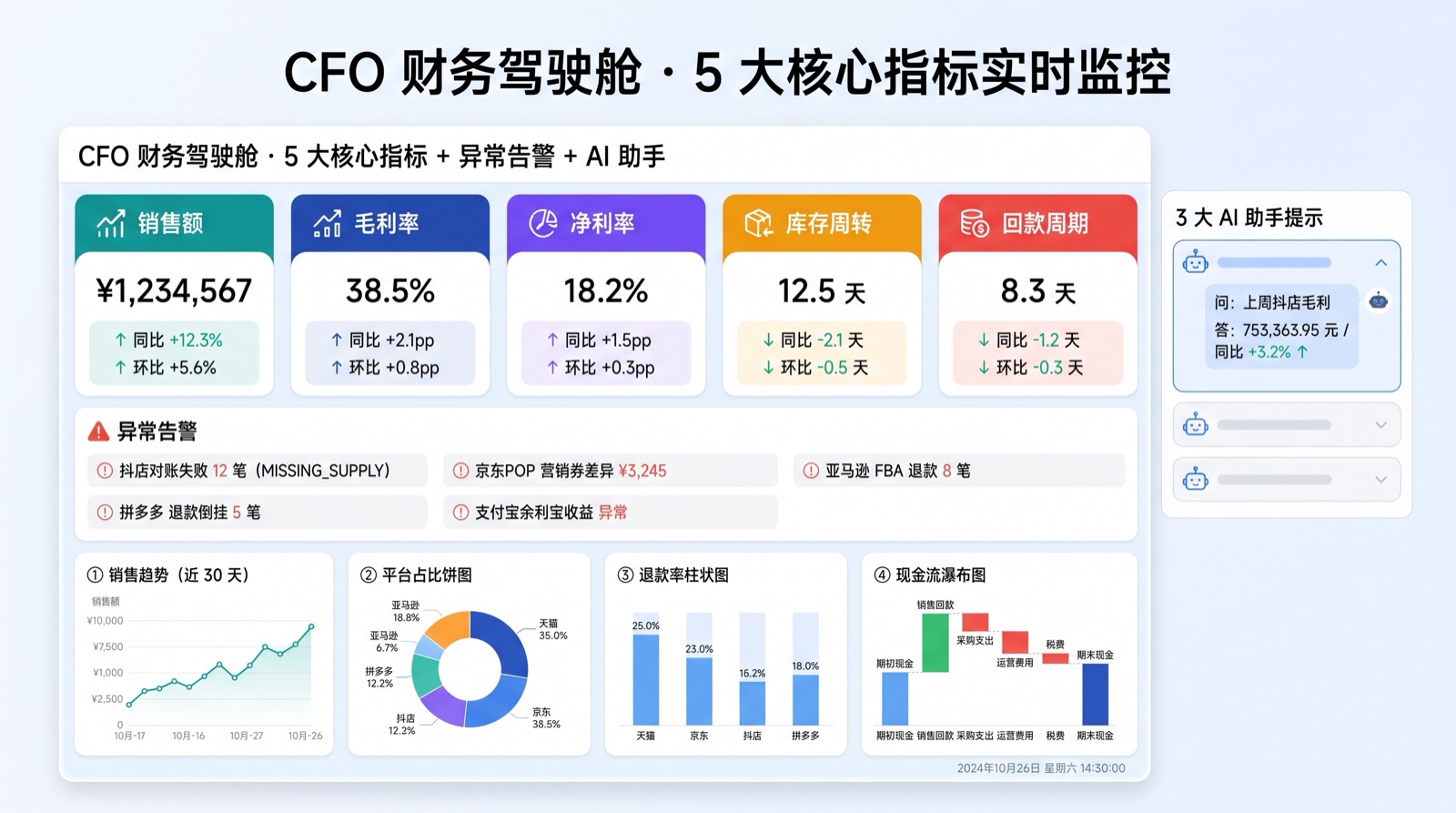
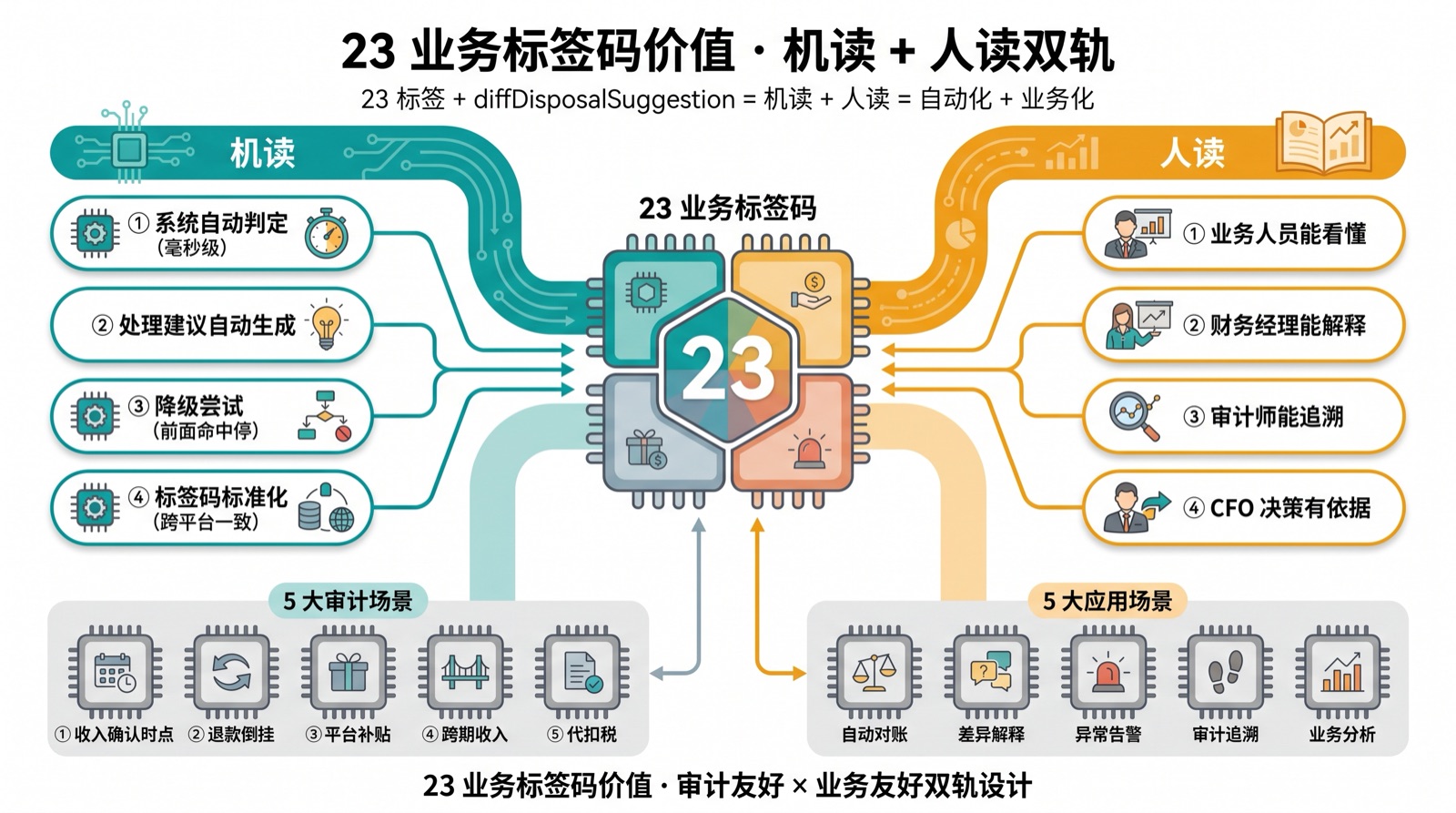
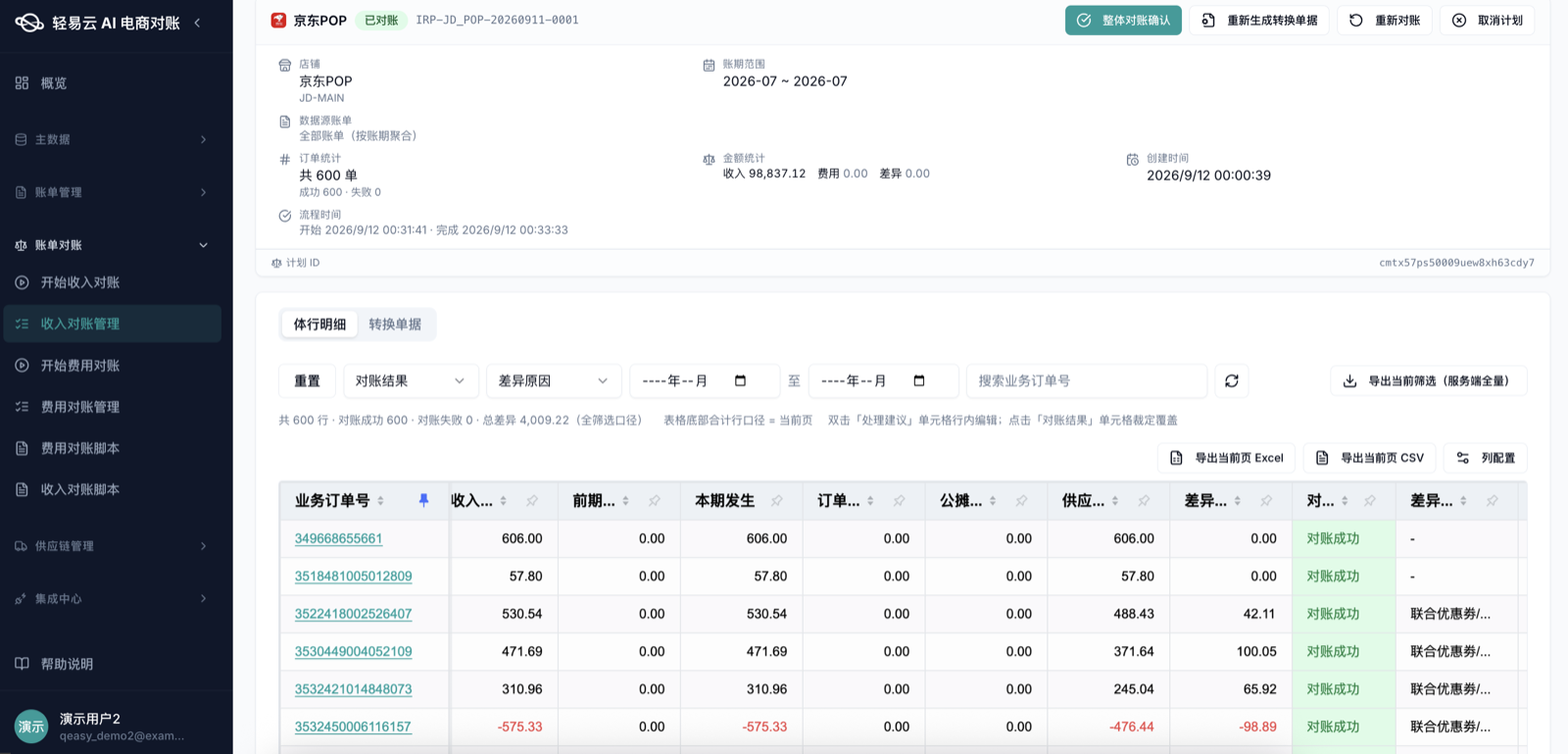
Your ERP keeps your internal books, but platform statements live outside it — how much commission was deducted, which coupons were funded, how much tax was withheld. The platform reconciles platform statements, business orders and ERP entries three-way, then pushes results back into the ERP for posting. It doesn't replace your ERP; it covers the part your ERP can't see.
Which platforms are supported? What if ours isn't on the list?
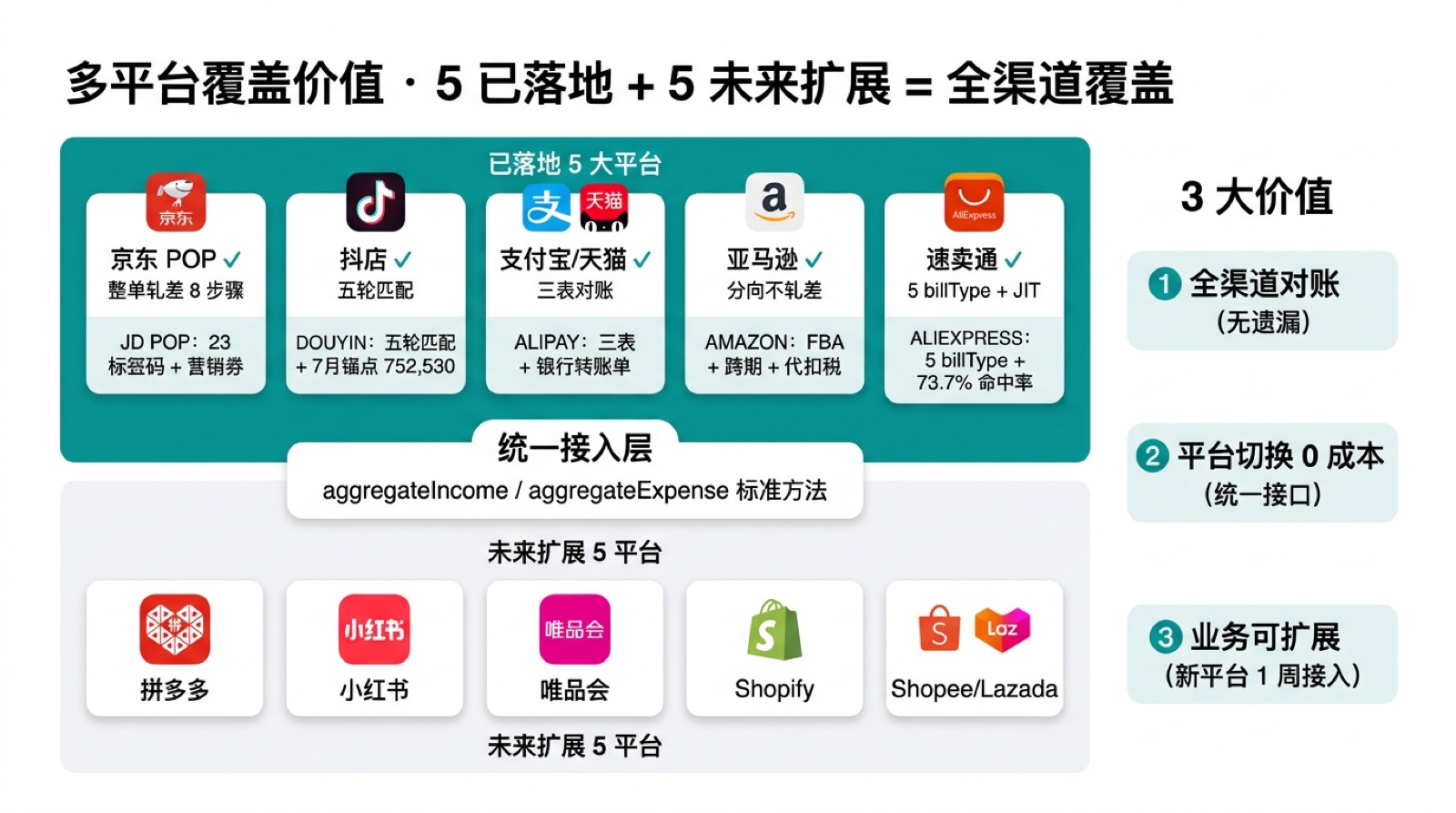
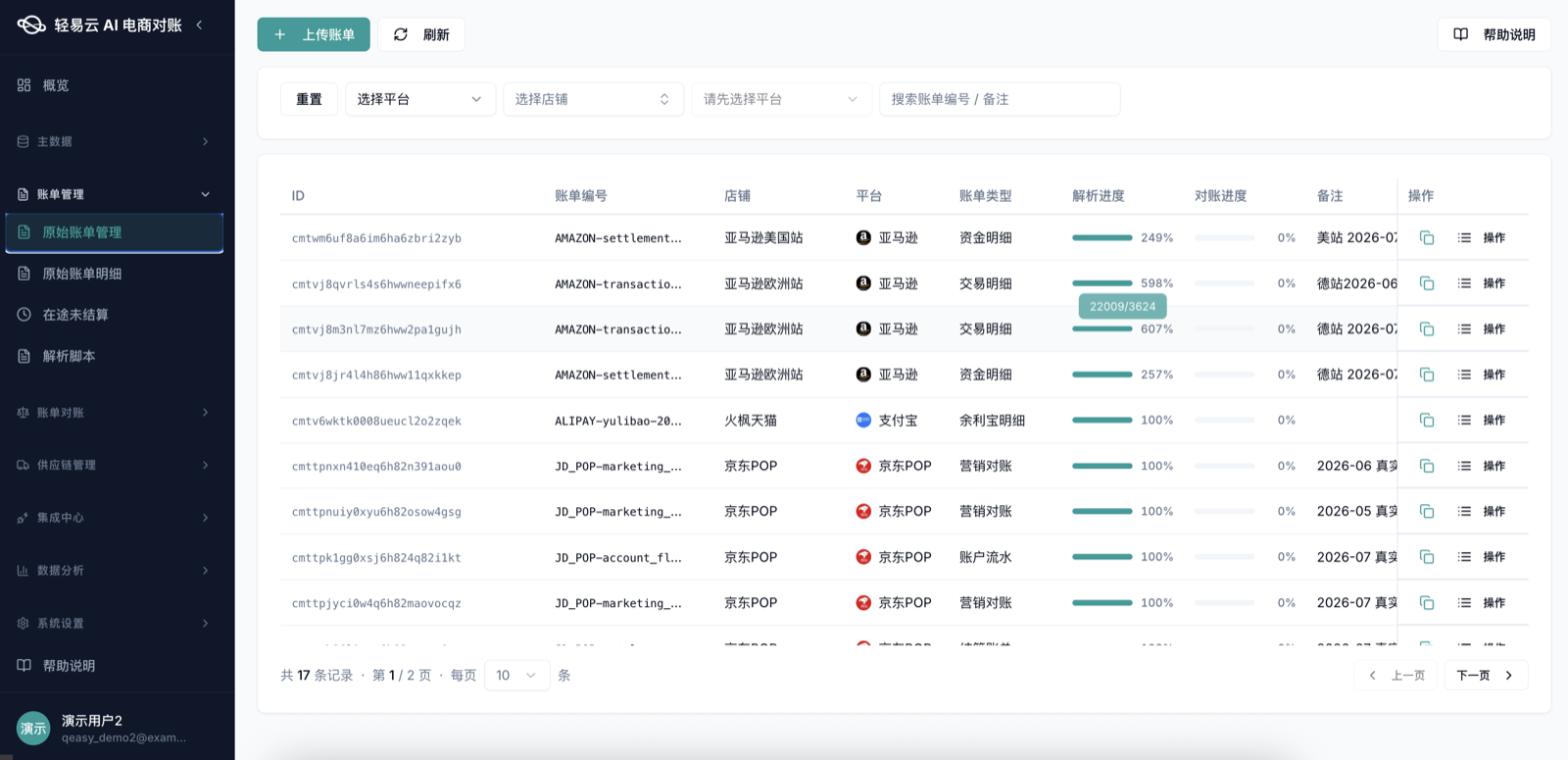
Fifteen platforms are covered: JD POP, Douyin Shop, Alipay (Tmall), Pinduoduo, Xiaohongshu, WeChat Channels, VIP.com, Amazon, Temu, Shopee, Lazada, eBay, AliExpress, Shopify and Newegg. Onboarding a new platform is a routine capability, not a custom project — statement formats are adapted within days, with the AI assistant doing most of the work.
Platform statement formats change often. Will a change leave us stranded?
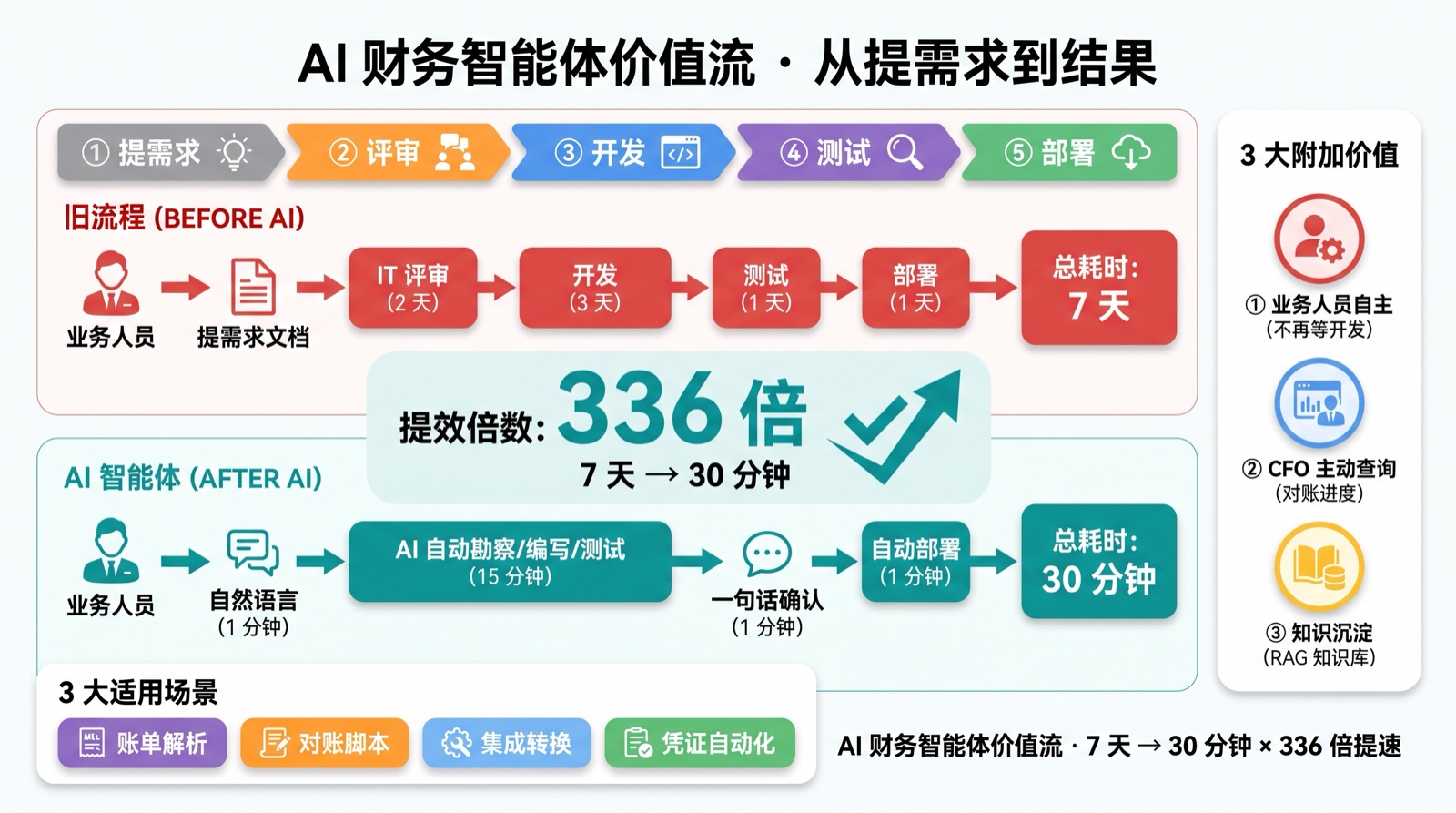
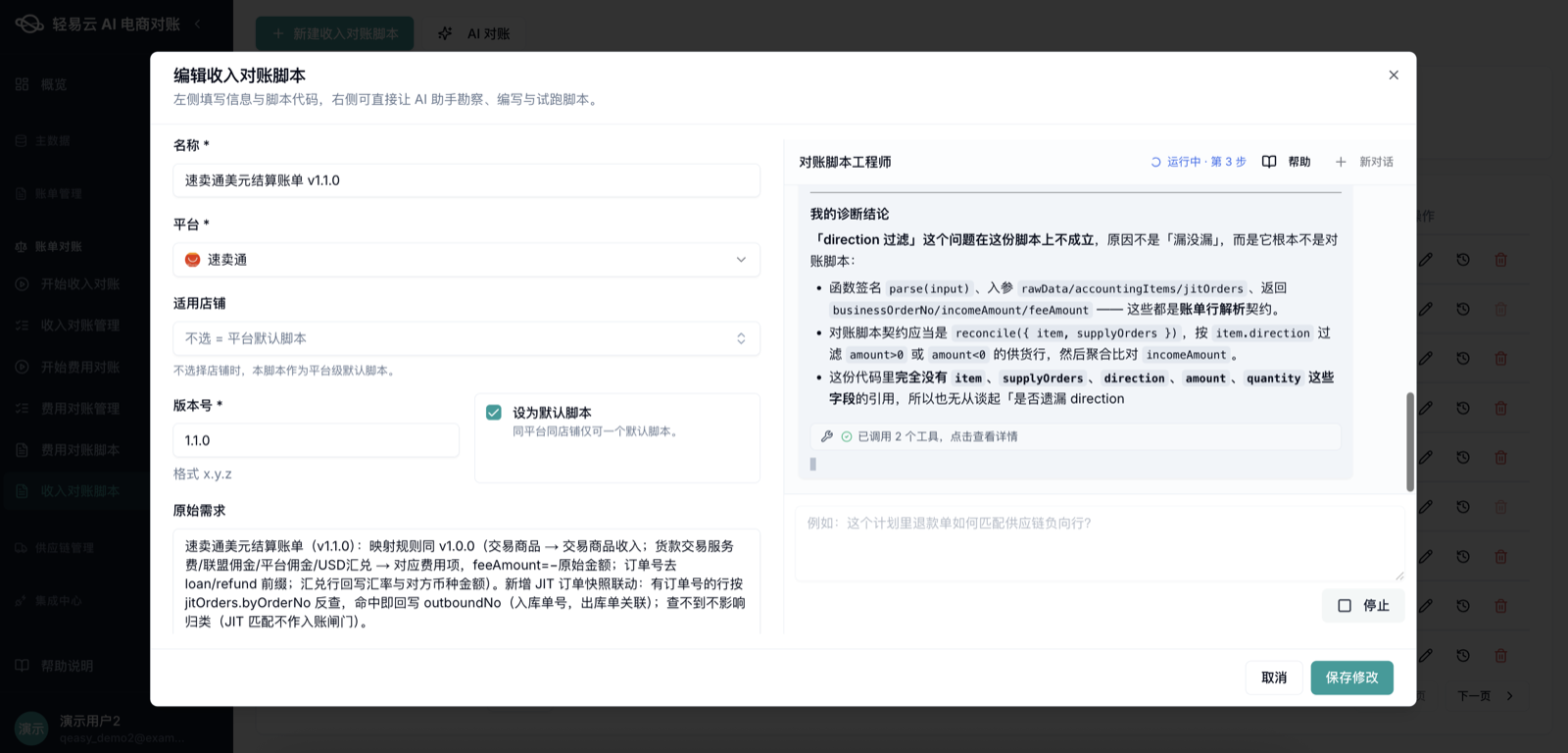
No. Adaptation rules are visual and version-managed, and the AI assistant helps with the change: describe what changed, adjust automatically, validate before enabling — business users respond the same day instead of queueing for development. Every change is audited and rollbackable.
Is our financial data safe? Can the AI mess up our books?
The AI assistant has no direct write path to your books: all validation runs in an isolated environment; every real execution requires human confirmation; every step is audited and rollbackable; and permissions for query / authoring / testing / execution are strictly separated. The AI proposes; humans decide.
How soon after go-live will we see results?
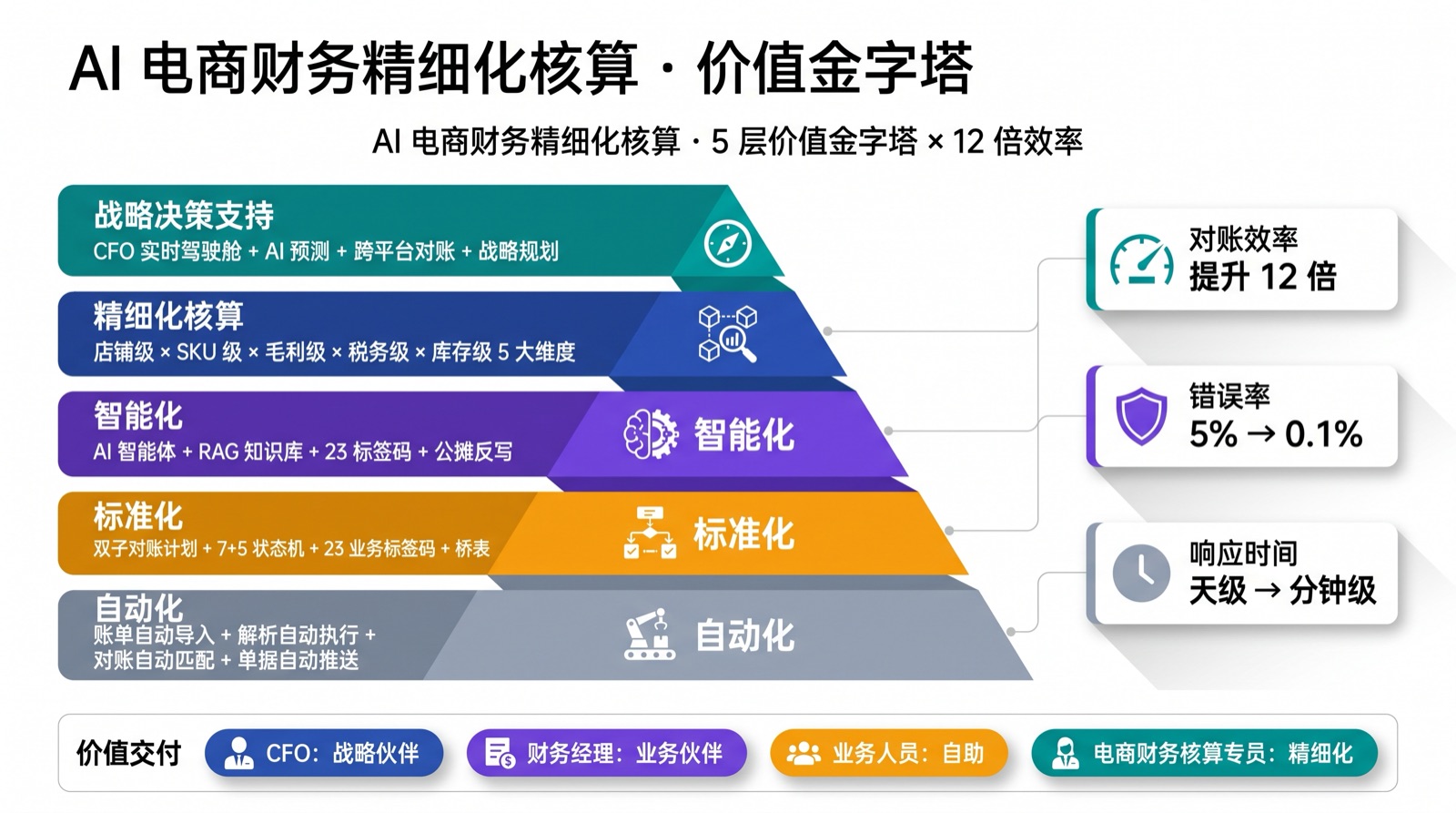
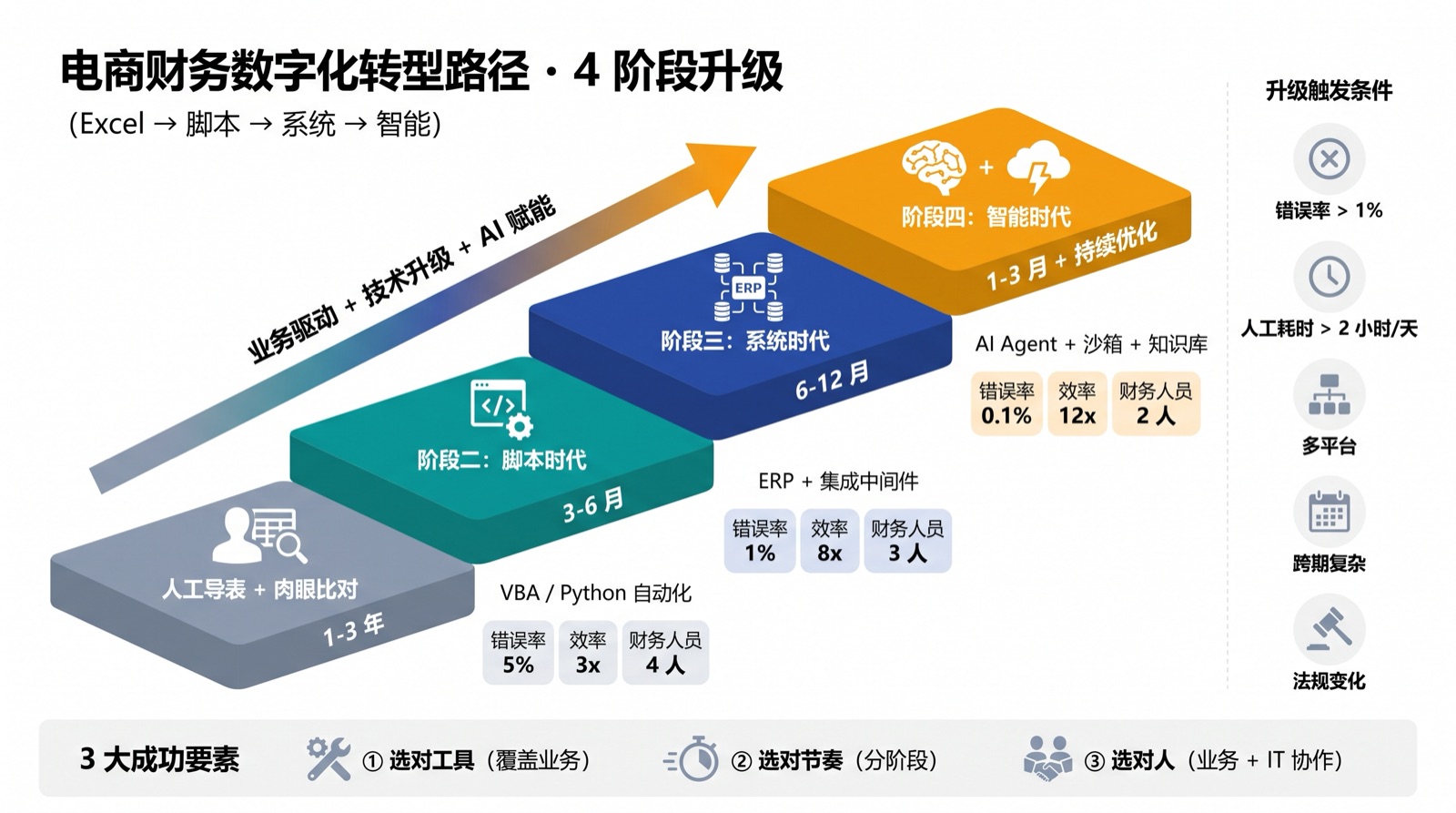
We recommend a single-platform pilot: the 'import → auto-match → variance attribution' loop runs within weeks, then expands platform by platform each month, and finally connects to your ERP for automatic posting. Companies completing the full rollout typically see 8–12× efficiency gains, error rates dropping from ~5% (manual) to around 0.1%, with full payback in a median of 26 months.